Skip to content
Home / Presswood pallet machine / Molded Pallet Production in 2026: ISPM-15 Exemptions, PPWR Rules and Biomass Expansion

Molded Pallet Production in 2026: ISPM-15 Exemptions, PPWR Rules and Biomass Expansion

Molded pallet production has moved from a niche alternative to a mainstream export and warehouse solution. In 2026 the drivers are clearer than ever: tightening phytosanitary enforcement, rising empty-pallet space costs, and the practical need to turn local wood waste or agricultural residue into a load-rated, ISPM-15-exempt carrier.

According to Future Market Insights, the molded wood pallets market sits at roughly USD 2.3 billion in 2026 and is projected to reach USD 4.1–4.2 billion by 2036 at a 6.1% CAGR. Nestable formats already capture nearly half the volume. India is the fastest-growing major market. These numbers reflect procurement teams that now ask first “Can my fiber be pressed into a reliable pallet?” rather than simply “What is the machine price?”
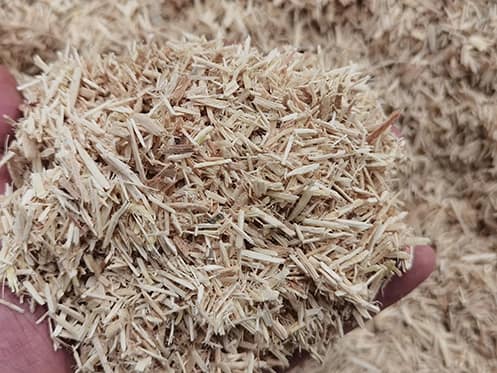
wood chips for press wood pallets

Regulatory Pressure Is Doing the Marketing

2026 has delivered four successive tightenings on solid-wood packaging. The United States enforced hyphenated ISPM-15 mark formatting. The EU activated electronic TRACES verification. France introduced per-consignment CHED-PP requirements for certain goods after a pine wood nematode outbreak. On 1 November, China’s GACC Order 283 took effect, strengthening licensing discipline and legal backing for wood-packaging treatment enterprises.

Molded presswood pallets sit outside this friction. They are manufactured from wood fiber and resin under high temperature and pressure (typically 150–200 °C in a 1,000–1,600-ton or larger hydraulic press). ISPM 15 treats them as processed wood, alongside plywood and OSB. No fumigation certificate, no treatment facility number, and no extra data entry are required. Surveys already show more than 70% of exporters preferring ISPM-15-exempt options. The cost of the solid-wood route—treatment fees, extra days of lead time, and detention risk—makes the premium for a molded unit easy to justify.

On the plastics side, the EU Packaging and Packaging Waste Regulation (PPWR) raises the stakes for 2030 and beyond. Recyclability grades will determine market access. Color and filler decisions locked into a mold ordered in 2027 will still be shipping when the rules bite. Near-infrared sorting cannot “see” certain black formulations, so material and color choices must be validated early. Compression-molded recycled plastic pallets using advanced core-pulling molds offer one path; ZK Hydraulic’s recent four-core-pulling mold trials on a ZK-P1800 press demonstrated a 1,300 × 1,100 mm pallet at approximately 23 kg from 100% mixed recycled plastics with reported dynamic loads around 2,000 kg.

Feedstock Versatility Is the New Competitive Edge

Buyers at recent shows, including CeMAT Asia 2026, arrived with photos of local waste rather than standard specifications. Reed, coconut husk, rice husk, hemp stalk, flax, peanut shell, and mixed plastic scrap all appeared. Successful molded pallet production depends less on raw press tonnage and more on particle size, moisture (target 8–12% before mat forming), resin system (MDI for faster cycles and wetter fiber tolerance, or UF/MUF for lower cost), and mold design.

Engineering teams have published trial results showing that agricultural residues can meet structural targets when preparation and process control are correct. Resources such as the rice husk molded pallet guide and the coconut fiber molded pallet manufacturing overview illustrate practical pathways. The same platform often supports both wood-fiber and recycled-plastic lines, giving operators two waste streams and two revenue lines. Capacity is governed by cycle time (commonly 180–240 seconds on 1,600-ton-class presses), mold changeover, and back-end take-out rather than the number of experienced hands on the floor. Fully automatic configurations can deliver consistent output measured in pallets per shift once drying, dosing, and demolding are stable.

Operational Advantages That Survive the Warehouse Floor

Nestable molded pallets routinely achieve 4:1 empty stacking ratios. One industry example noted roughly 1,100 units per truckload versus 500–540 for conventional stringer pallets, cutting both freight and warehouse footprint. Dimensional consistency (deck flatness often held near ±2 mm) supports AGV, ASRS, and roller-conveyor applications where nailed pallets introduce variation. Nail-free decks reduce product damage, splinter risk, and floor scuffing—valuable in food, retail display, and pharmaceutical environments.

Load ratings must still be validated. Static, dynamic, and racking loads depend on density (typically 0.8–1.2 g/cm³), rib design, and support geometry. Practical references include the molded pallets load capacity guide and the racking load analysis. Moisture control and adhesive choice affect both cycle time and long-term durability; edge finishing and release-agent systems prevent common production defects.

Practical Next Steps for 2026–2027 Projects

Presswood Pallet 9 FEET TYPE
  • Test your actual fiber or plastic scrap before finalizing tonnage and mold. Material preparation decides whether the line runs profitably.
  • Prioritize nestable export formats if volume is one-way international; add rackable or specialized molds only against confirmed orders.
  • Size the dryer and material-handling system as carefully as the press. Over-buying tonnage while under-buying drying is a common and expensive error.
  • Factor mold life (often 250,000–300,000 cycles) and the 2030 PPWR horizon into color and recyclability decisions today.
  • Consider dual-material capability. Wood-fiber and recycled-plastic pallet lines on related platforms hedge against feedstock or regulatory shifts.

Molded pallet production in 2026 is no longer an experiment. It is the combination of an ISPM-15 exemption that eliminates a growing compliance tax, nestable geometry that frees warehouse and container space, and the ability to turn local biomass or plastic waste into a consistent, load-rated carrier. Producers and users who treat feedstock testing, process control, and regulatory foresight as core specifications will capture the majority of the projected growth.

For deeper technical detail on load ratings, biomass trials, or production-line configuration, review the presswood pallet machine product range and related engineering resources from ZK Hydraulic and PalletsBiz. Recent project notes and material trials continue to illustrate how these principles work at plant scale.

Nested Pallets

Pallet Specifications

Raw Material: Wood Waste, Wood Scrips, Wheat Straw, Rice Husk, Coconut Fiber, Flax, Palm Branches
Pallet Size: 600x800mm,1200x800mm, 1200x1000mm, 1100x1100mm, 1200x1200mm,
Dynamic Load: 500Kg-2500Kg,
Static Load: Max 13000 Kg
Glue Ratio:
UF-15% or MDI 4-5%
4 Way & 2 Way Entry
Pallet Weight: 10Kg-25Kg

Description:

Molded presswood pallets are crafted from a combination of wood fiber and resin. Through a process of high heat and pressure molding, these pallets gain remarkable water—and mold-resistance properties. This makes them highly suitable for all domestic and export shipping needs.
 
Notably, these pallets are insect-free and fall under the category of “processed wood.” Their design is both practical and efficient. With a nestable and space-saving layout, they offer 2-way entry for hand jacks and 4-way entry, ensuring compatibility with forklifts, most conveyors, and select pallet dispensers. Easy to handle, they provide a reliable solution for your shipping and storage requirements.

Molded Wood Pallet Features & Benefits:

Cost-Effective Solution for Your Pallet Needs: Our Molded Presswood Pallets present a highly cost-effective alternative to traditional wooden and plastic pallets. They can be reused multiple times, significantly reducing the cost per shipment. This makes them an economical choice for businesses looking to optimize their shipping expenses.

Lightweight Yet Durable Construction: Weighing 60% less than conventional hardwood pallets, these pallets don’t sacrifice strength. Their durability allows for repeated use, and their affordability means they can be easily replaced if lost, making them perfect for return and reuse programs where pallet management can be challenging.

Nestable and Space-Saving Design: With a remarkable space-saving ratio of 4-1, our pallets offer substantial savings in both warehouse space and shipping costs. Their nestable design simplifies handling and storage, enhancing overall operational efficiency.

Cargo Protection and Safety Features: The one-piece design, devoid of nails or staples and featuring rounded corners, not only safeguards your products and packages from damage but also minimizes the risk of injuries to employees and customers during handling. This design aspect contributes to a safer and more reliable shipping process.

Export-Ready without Hassles: Unlike many pallets, our Molded Presswood Pallets are not subject to IPPC-ISPM 15 regulations as they are classified as “processed wood”. The high-heat manufacturing process eliminates the necessity for additional pest treatments for overseas shipping, ensuring seamless export to any country.

Environmentally Conscious and Sustainable: These pallets are produced using a high heat and pressure process that transforms damaged logs, wood waste, and other wood by-products into new, functional pallets, consuming less energy in the process. 

Ideal Applications: Due to their absence of nails, insect pests, mold, and fungus, Molded Wood Pallets are the preferred choice for various industries.

Contact My TEAM

My team will reply to you within 12 hours.

this icons show customer the submit finished

Successful

Thanks, Your submission was successful, My team will reply you within 12 hours.

Learn more about us now