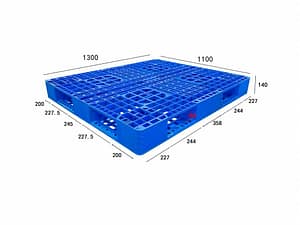
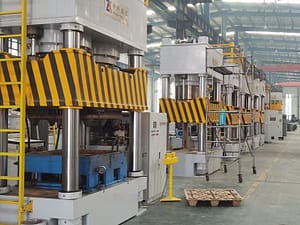
A molded recycled plastic pallet is a one-piece platform pressed from mixed post-consumer polyolefin flake — shredded, extruded, dosed, and formed in a hydraulic press without washing or pelletizing. For photovoltaic module logistics, three numbers decide whether it fits: dimensional tolerance, flatness under a heavy static stack, and recycled content you can actually document. A 1,600–1,800 ton compression press turns out a pallet in about 60 seconds of holding time, at 18–25 kg per piece, with dynamic load ratings near 2,000 kg and static ratings near 6,000 kg. Those are the figures a solar packaging engineer should start from, and this guide walks through why the spec matters, what the market is doing, and what to test before an order.

Why solar packaging is a spec problem, not a price problem
Shipping a solar module is not like shipping cartons of detergent. A 72-cell glass-glass module weighs 25–32 kg, its glass face cracks from point loads measured in single kilograms, and the person who discovers the damage is an EPC crew on a desert site, months after the container cleared customs. Wooden pallets carry two known failure modes here. Protruding nail heads — the industry calls it nail pop — work loose under road vibration and press into the bottom module. Moisture absorption leads to mold and staining during the weeks modules often sit staged outdoors before installation.
Trade analysis of PV supply chains puts international logistics at 14.7–15.8% of total module cost. Packaging is a small slice of that, but it is the slice that decides whether glass arrives intact. When a single container carries $150,000–300,000 of modules, nobody in the room argues over a $2 pallet upgrade. They argue over whether the pallet bows, whether the surface scratches a backsheet, and whether the footprint matches an automated packaging line.
That is why the question has shifted from price to specification. Buyers now ask for deflection under a defined static load, tolerance across the deck, and paperwork proving recycled content. A pallet that cannot answer those questions does not get past the packaging engineer, no matter what it costs.
What the market numbers say
The demand base underneath this is enormous, and it just changed shape. SolarPower Europe’s Global Market Outlook counts a record 664 GW of new PV installed globally in 2025, with cumulative capacity passing 3 TW early in 2026. The same report expects 2026 to dip 8% to about 612 GW — the first annual decline in more than two decades — before recovering toward 864 GW a year by 2030. Even a down year moves half a million 25-kilogram modules out of factories on pallets, and every one of those modules crosses at least one export border.
Growth has slowed, in other words, but volume has not. Outside China the direction is still up: Europe added 67.2 GW in 2025 as a single market and is forecast to grow about 3% this year, while the Middle East and Africa is projected to jump 48% from a small base, per a regional read of the same outlook. And when volume plateaus, module makers stop competing on capacity and start competing on cost per watt shipped. Packaging waste, breakage claims, and customs delays all land in that number, which is exactly where pallet specification stops being a procurement afterthought.
Chinese equipment builders have noticed. Trade coverage in early November shows domestic suppliers actively promoting dedicated PV-module pallet molding equipment, and one Fujian producer running a molded pallet line plans to supply 210,000 PV module pallets to local module factories within two years, currently pressing 80–100 pieces a day. A niche two years ago is turning into a defined product category.
The numbers a solar buyer should ask for
Strip away the brochure language and a solar pallet conversation comes down to five numbers.
First, static load. A palletized stack of glass-glass modules plus packaging typically reaches 1.5–2.5 tonnes, and warehouse stacking can double it. Trial data from a four-core-pulling mold on a ZK-P1800 press — a 1,300 × 1,100 mm pallet, about 23 kg, pressed from 100% mixed recycled plastic — came in around 6,000 kg static and 2,000 kg dynamic, measured with reference to ISO 8611 methods. That covers vertical warehouse stacking with margin. Our plastic pallet machine page lists the full press range from 800 to 3,000 tons.
Second, deflection. Bowing under static load is what flexes glass. A molded plastic deck, ribbed in the mold and cured under 150–200 tonnes per square meter class pressures, holds its shape where a nailed timber stringer gradually sags. Ask any supplier for the measured deflection at your actual stack weight, not a catalog rating.
Third, dimensional tolerance. Automated module packaging lines and container loading plans both run on arithmetic. A compression-molded pallet holds ±1–2 mm across a production run, which makes stacking-height calculations reliable inside a 40 ft high-cube container. Sawmill timber, cut to whatever tolerance the local shop manages, does not.
Fourth, holding time and output. Sixty seconds of press holding on the trial mold meant one pallet a minute from a single station; our dual-station recycled plastic press doubles that without a second mold. A line pressing 15–20 pallets an hour covers a module plant’s daily dispatch with one shift.
Fifth, weight. Every kilogram of pallet is a kilogram of container payload spent on air. At 18–25 kg, molded recycled plastic sits between heavy injected plastic designs and timber — and a buyer who negotiates four kilograms off the pallet recovers roughly 10 tonnes of freight headroom per thousand containers.
Where each pallet material fits
Molded wood and molded recycled plastic are siblings, not rivals, and the solar market is already split. One European equipment maker has built a marketing page around compressed wood pallets for solar shipping, selling the nail-free surface and a 7-tonne static rating. Reusable packaging companies offer returnable plastic module pallets that claim breakage reductions up to 95%, aimed at distributors and EPCs who run the same routes every week — the same rental logic that is rewriting pallet specifications on the wood fiber side.
The one-way export leg is different. A module shipped from Vietnam or Malaysia to an EPC yard in Spain does not come back, so the economics favor a low-cost, recyclable, single-use platform — which is precisely what compression molding from waste plastic produces. The pallet protects glass on a multi-week ocean leg, absorbs outdoor staging in a desert or a monsoon yard without rotting, and at end of life carries real scrap value instead of a disposal fee — roughly $4–13 of recovered material in a 20 kg pallet, against a gate fee for timber.
There is a compliance dividend too. ISPM 15, the IPPC standard on wood packaging in trade, exempts processed wood made with glue, heat, and pressure — molded wood pallets cross borders without heat-treatment stamps. Molded plastic never needed the exemption in the first place, and it sidesteps the moisture and mold questions entirely. For a module maker shipping to forty countries, deleting one category of customs risk across all of them is worth real money.
The recycled content angle is arriving
European module and inverter importers increasingly sit inside supply chains governed by the EU packaging regulation, which requires 35% post-consumer recycled content in non-contact plastic packaging from 2030. A molded recycled plastic pallet is made of post-consumer material — often 100% of it — so the recycled-content question answers itself. The documentation trail matters more than the percentage: batch records from the recycler, a declaration from the pallet maker, and a spec sheet that names the polymer mix.
Module manufacturers also carry their own Scope 3 reporting duties, and packaging is one of the few line items they can flip from virgin material to verified recyclate without touching the product itself. That turns the humble pallet into an ESG talking point in tender documents, which sounds absurd until a utility buyer asks for it in writing.
What to test before you order
Three checks separate a workable project from an expensive mistake. Mold footprint comes first: module dimensions are non-standard and keep growing, so the pallet should mirror the module footprint rather than force the packaging line to adapt. Molds are cut steel; changing the drawing later means a new tool and a new qualification round. Our dual-station press launch notes cover how one mold platform serves multiple footprints.
Feedstock behavior comes second. Mixed polyolefin flake varies batch to batch, and blend stiffness changes with the waste stream. Any serious line supplier runs your actual material before quoting — crushed cable skin, film scraps, mixed rigid — and returns load-test results on pallets pressed from that exact feed. If a supplier quotes from a brochure, walk away.
Integration comes third. The pallet must suit the strapping, corner boards, and automated stacking equipment already on the packaging line. Send the module spec and the line layout to the machine builder early; our news page follows the material trials and market signals shaping this category, and our contact page is the direct route to a press trial with your own material.
The solar market may wobble year to year, but half a terawatt of annual module flow is not going away. Pallets that survive glass, weather, customs, and an audit trail will keep selling through all of it.