Skip to content
Home / Presswood pallet machine / Molded Presswood Pallets: Biomass Innovation and Automation for 2026 Logistics

Molded Presswood Pallets: Biomass Innovation and Automation for 2026 Logistics

Global logistics buyers are rewriting pallet specifications. Nestable formats, ISPM-15-exempt status, tighter dimensional tolerances for automation, and pressure from EU packaging rules are shifting volume toward molded presswood pallets made from wood waste and agricultural biomass. Market analyses place the segment near USD 3.4 billion in 2026 with growth toward USD 5.1 billion by 2033 at roughly 6.1% CAGR, driven by export lanes and warehouse-space constraints.

The core production process remains high-temperature hydraulic compression. Recovered wood fiber or plant residues are dried, mixed with resin (commonly MDI or UF systems), metered into a steel mold, and pressed at 150–220 °C under 15–20 MPa or higher for 180–240 seconds or less on modern lines. The result is a one-piece pallet with no nails, consistent deck height, and the phytosanitary exemption that applies to processed wood under ISPM-15. Because the material has already been subjected to glue, heat, and pressure, it is classified as low-risk and does not require the heat-treatment stamp demanded of solid-wood packaging.

molded stringer pallet

Why Nestability and Consistency Matter Now

A recent discussion in Material Handling 24/7 with Litco noted that nestable pressed-wood designs can place roughly twice as many empty pallets in the same footprint and nearly double the count per truckload (around 1,100 versus 500–540 for conventional stringer pallets). That arithmetic compounds across multi-site networks and one-way export flows. At the same time, automated warehouses and AGVs reject dimensional variation. A dedicated mold plus closed-loop dosing and press control delivers the repeatability that hand-assembled or nailed pallets cannot match once volume crosses shifts and crews.

Fully automatic configurations on 1,200–2,200-ton class presses can sustain measured cycle-based output (often cited near 12 pallets per hour on certain setups), letting planners schedule against equipment beat rather than available skilled labor. For operators evaluating capacity, matching press tonnage to mold area and target density is essential; undersized presses produce lower-density boards that fail load or durability targets. Detailed matching guidance is available in the technical post Press Tonnage vs Pallet Size: A Complete Matching Guide.

Feedstock Flexibility and Regulatory Pressure

CeMAT Asia 2026 conversations showed buyers testing their own local fibers—hemp stalk, reed, flax, coir, rice husk, peanut shell—rather than defaulting to virgin wood or standard sawdust. Successful trials, including reed-based molded pallets, demonstrate that agricultural residues can meet structural requirements when moisture, particle size, and resin systems are controlled. Resources covering these options include Rice Husk Presswood Pallets and the broader overview The Production Process of Presswood Pallets.

On the plastic side, compression-molding lines are handling mixed recycled feedstock. ZK Hydraulic’s four-core-pulling mold trials on a large-platen press produced a roughly 23 kg 1,300 × 1,100 mm pallet from 100% mixed recycled plastic with reported dynamic loads near 2,000 kg. Color and additive choices now matter for future recyclability grades under the EU Packaging and Packaging Waste Regulation (PPWR). From 2030, packaging must meet design-for-recycling criteria and performance grades; black or highly filled formulations that defeat NIR sorting risk lower grades and restricted market access. Decisions locked into tooling today will still be shipping in 2030. Related analysis appears in Buy the Waste, Not the Pellets: Why the Recycled Plastic Pallet Business Case Flipped in 2026 and How Much Energy Does It Take to Mold One Recycled Plastic Pallet?.

Installation Scale and Operational Reality

Real deployments illustrate the shift. ZK Hydraulic has completed large automated presswood lines in Vietnam (including multi-press installations described as the country’s largest), plus projects involving Mozambique, Jordan, and Romania covering both wood-fiber and recycled-plastic compression. These turnkey lines integrate drying, metering, pressing, and automated take-out, reducing the skill dependency that limits conventional pallet plants. Complementary market and application content from PalletsBiz covers comparisons such as Molded Wooden Pallets vs. Traditional Wooden Pallets: A Comparative Analysis for Smarter Logistics and regional demand notes including The Rising Market of Presswood Pallets in Vietnam.

For further context on production consistency and delivery planning, see also How to Choose the Right Molded Pallet Press and the FAQ on Presswood Pallet Production Line.

Practical Takeaways for Buyers and Producers

  • Prioritize nestable and rackable mold portfolios if export or automated-warehouse volume is material.
  • Validate local biomass or mixed-plastic feedstock with documented moisture, density, and load trials before locking capital.
  • Size press tonnage, mold area, and cycle time together; request metered energy and output data.
  • Factor ISPM-15 exemption and forthcoming PPWR recyclability grades into material and color specifications.
  • Demand installation references and after-sales support for lines expected to run multiple shifts.

Molded presswood and related compression-molded pallets are no longer niche alternatives. They address space, compliance, consistency, and waste-utilization constraints that conventional solid-wood and some plastic options handle less efficiently. Equipment providers such as ZK Hydraulic, together with technical and market resources from platforms like PalletsBiz, continue to expand the practical feedstock and automation envelope. Operators who lock in the right mold, process control, and regulatory foresight today will hold a measurable advantage through the rest of the decade.

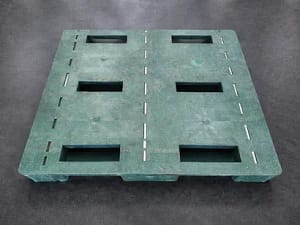
Nested Pallets

Pallet Specifications

Raw Material: Wood Waste, Wood Scrips, Wheat Straw, Rice Husk, Coconut Fiber, Flax, Palm Branches
Pallet Size: 600x800mm,1200x800mm, 1200x1000mm, 1100x1100mm, 1200x1200mm,
Dynamic Load: 500Kg-2500Kg,
Static Load: Max 13000 Kg
Glue Ratio:
UF-15% or MDI 4-5%
4 Way & 2 Way Entry
Pallet Weight: 10Kg-25Kg

Description:

Molded presswood pallets are crafted from a combination of wood fiber and resin. Through a process of high heat and pressure molding, these pallets gain remarkable water—and mold-resistance properties. This makes them highly suitable for all domestic and export shipping needs.
 
Notably, these pallets are insect-free and fall under the category of “processed wood.” Their design is both practical and efficient. With a nestable and space-saving layout, they offer 2-way entry for hand jacks and 4-way entry, ensuring compatibility with forklifts, most conveyors, and select pallet dispensers. Easy to handle, they provide a reliable solution for your shipping and storage requirements.

Molded Wood Pallet Features & Benefits:

Cost-Effective Solution for Your Pallet Needs: Our Molded Presswood Pallets present a highly cost-effective alternative to traditional wooden and plastic pallets. They can be reused multiple times, significantly reducing the cost per shipment. This makes them an economical choice for businesses looking to optimize their shipping expenses.

Lightweight Yet Durable Construction: Weighing 60% less than conventional hardwood pallets, these pallets don’t sacrifice strength. Their durability allows for repeated use, and their affordability means they can be easily replaced if lost, making them perfect for return and reuse programs where pallet management can be challenging.

Nestable and Space-Saving Design: With a remarkable space-saving ratio of 4-1, our pallets offer substantial savings in both warehouse space and shipping costs. Their nestable design simplifies handling and storage, enhancing overall operational efficiency.

Cargo Protection and Safety Features: The one-piece design, devoid of nails or staples and featuring rounded corners, not only safeguards your products and packages from damage but also minimizes the risk of injuries to employees and customers during handling. This design aspect contributes to a safer and more reliable shipping process.

Export-Ready without Hassles: Unlike many pallets, our Molded Presswood Pallets are not subject to IPPC-ISPM 15 regulations as they are classified as “processed wood”. The high-heat manufacturing process eliminates the necessity for additional pest treatments for overseas shipping, ensuring seamless export to any country.

Environmentally Conscious and Sustainable: These pallets are produced using a high heat and pressure process that transforms damaged logs, wood waste, and other wood by-products into new, functional pallets, consuming less energy in the process. 

Ideal Applications: Due to their absence of nails, insect pests, mold, and fungus, Molded Wood Pallets are the preferred choice for various industries.

Contact My TEAM

My team will reply to you within 12 hours.

this icons show customer the submit finished

Successful

Thanks, Your submission was successful, My team will reply you within 12 hours.

Learn more about us now