A pallet that carries no batch code is a pallet you cannot defend in an audit. That is the whole point of Article 15 of Regulation (EU) 2025/40. It asks for a type, batch or serial number, plus the manufacturer’s name and address. It does not ask for a unique number on every unit. Buyers who understand that difference stop paying for tags they never needed, and start writing tender clauses that suppliers can actually meet.
This checklist is for the people who buy the pallets, not the people who build the press. It covers what to demand, what to refuse, and how the paperwork outlives the pallet.
Start with the mark, not the technology
Article 15(5) wants an identifier. Article 15(6) wants a manufacturer name and postal address. Both can sit on the pallet or behind a QR code. An accompanying document is acceptable only when size or nature makes on-product marking impractical.
The Commission’s PPWR FAQ, updated in August 2026, settles the question most buyers get wrong. The number does not need to be unique to each unit. A type, model or production batch is enough. The mark exists to link the pallet to its technical file and its declaration of conformity.
So the first tender line is not “RFID required”. It is “batch identification, permanently marked”. Those are different purchases at very different prices.
Five documents to ask for before the first delivery
The mark is only half of the obligation. The file is the other half. Under Article 15(3), the declaration of conformity and the technical documentation stay available for five years on single-use packaging. On reusable packaging the period is ten years, counted from the date the pallet is placed on the market.
Ask any supplier for these five items:
- the EU declaration of conformity for that packaging type
- the technical file behind it, including material and recycled-content evidence
- the batch numbering convention, written down
- the retention undertaking, with a named keeper and a storage location
- a first-article photograph showing the mark
A supplier who cannot produce the first two is selling you a pallet with an unknown compliance history. That is a delivery risk, not a paperwork problem. Customs and market surveillance can ask for the file at any point, and the importer usually carries the exposure.
What a usable batch code looks like
A code that cannot be read is not a code. On moulded recycled pallets the surface fights back. Mixed polyolefin feed leaves a textured skin. Hot wash at 60–80 °C lifts adhesive labels within months. Ink at the fork entry disappears first, because that is where the truck touches.
Three parameters decide whether the mark survives a five-year service life. Depth of at least 0.8 mm, so it does not polish out. A position clear of the fork path and of the rib roots. A defined orientation, so every pallet in the batch is marked in the same place.
The best version of this is not a label at all. It is a text block cut into the mould cavity, with a small interchangeable date pin nearby. The mould carries the type and material class permanently. The pin carries the month. A two-minute change at shift start gives you year-and-month traceability across the whole batch.
For a buyer, the practical test is simple. Pick any pallet from the stack, photograph the underside, and read the code off the image. If that takes more than a few seconds, the marking specification is wrong.
Where per-unit identity still earns its money
None of the above rules out tags. It rules out paying for them by default.
On-metal UHF labels run about US$0.20–0.50 at volume. Rugged hard tags run US$2.50–5.00. A moulded recycled pallet of 20–27 kg typically sells for US$10–22. On a cheap pallet, a hard tag can approach a quarter of the unit price. That is a line item to negotiate, not a specification to inherit.
Three cases justify the spend. A pooling contract where the operator reconciles the fleet and pays for the data. A food or pharmaceutical loop where batch genealogy must be rebuilt years later. A high-value fleet where theft and loss outweigh compliance. Outside those, a moulded batch code plus a maintenance log does the same job for less.
There is also a timing argument. A written answer from the Commission on 2 November confirmed that reuse rotations can be demonstrated with statistical and operational records, not item-level tracking. If your supplier is quoting a tag on every pallet, ask which clause requires it. The answer is usually a customer preference, not a legal duty.
The tender clauses that actually work
Write these into the specification, and keep them short enough that a plant manager can act on them.
1. Identification. Each pallet carries a moulded type or model code and a month-year batch mark. Labels are not accepted as the primary identifier.
2. Position. Mark on the drawing, at least 30 mm clear of every fork opening.
3. Evidence. First-article photograph with a legible mark, submitted before shipment.
4. File. Declaration of conformity and technical documentation held for ten years on reusable pallets, with the keeper named.
5. Change control. Any change of material grade or recycled-content share triggers a new batch series and a reissued declaration.
That fifth clause is the one buyers forget. A resin substitution quietly changes what the declaration rests on. Without a change-control clause, the file on your shelf describes a pallet you stopped receiving two shipments ago.
Why this matters more in a soft recyclate market
Recycled polymer prices in Europe rolled over in the second week of November, according to Regenport’s market report. Recyclers wanted increases on energy costs and settled for flat. The same report notes that PPWR has so far had limited effect on recycled uptake, and that virgin HDPE sits well below its early-year level.
Read that as a buying opportunity with a catch. Cheap recycled pallets are available, and some of them are cheap because the marking and the file were never done. In a market where price is flat and supply is long, documentation is one of the few places where a supplier can still differentiate. Put it in the tender and the difference shows up immediately.
The same logic runs through the palletsbiz pattern library, where footprint and entry configuration are specified before the mould is cut. Marking belongs in that same conversation, for the same reason. Both are decided on paper, and both are expensive to change later.
A short audit script
If you already buy moulded recycled pallets, run this once. It takes an afternoon and it tells you where you stand.
Pull five pallets from three different deliveries. Photograph the underside of each. Try to read the batch code without cleaning the surface. Then ask your supplier for the declaration of conformity for each batch. Check that the material class on the paper matches the code on the pallet.
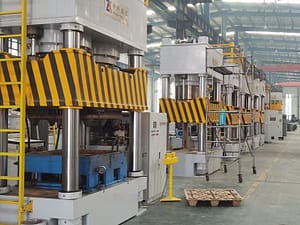
Two failures out of fifteen is normal. Ten out of fifteen means the specification was never enforced, and the fix belongs in the next purchase order rather than in a complaint. The mould specification page shows what a compliant tool looks like from the inside. The moulding machine range covers the presses those tools run on. Both come from ZK Hydraulic, which also publishes the marking note behind this checklist.
Compliance for a moulded pallet is not a technology purchase. It is a marking decision made at tooling, and a filing habit kept for a decade. Buyers who write it into the tender get it for almost nothing. Buyers who inherit whatever the supplier offers spend the next five years guessing which batch they are standing on.