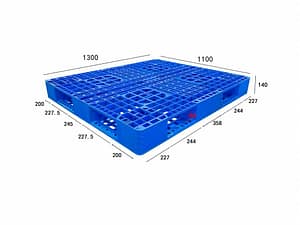
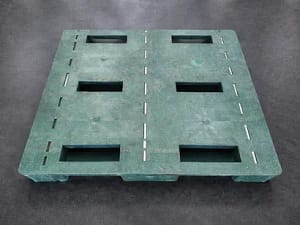
As international supply chains navigate tighter phytosanitary border inspections and aggressive corporate net-zero targets, industrial packaging strategists are aggressively modernizing their plant floors. Traditional untreated lumber pallets continuously expose exporters to customs fumigation delays, splintering hazards, and volatile raw material pricing. To structurally insulate logistics networks, leading manufacturers are pivoting toward automated, high-tonnage thermal compression technology that transforms regional forestry waste and alternative biomass into standardized, high-performance assets.
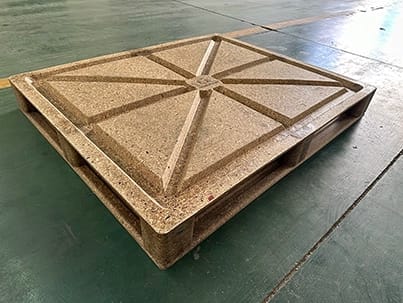
At the center of this industrial shift lies the advanced presswood pallet machine—a heavy-duty hydraulic solution engineered to deliver flawless structural density, strict regulatory exemption, and unmatched production efficiency.
The Macro Shift: Regulatory Readiness and Nestable Efficiency
Recent market intelligence reports indicate that the global molded wood and compressed pallet sector is tracking toward a multi-billion-dollar valuation, powered by a steady compound annual growth rate. Conical nestable designs currently capture massive market adoption, prized heavily for maximizing automated warehouse storage footprints and slashing one-way export freight overhead.
However, achieving these operational benchmarks requires moving beyond basic machinery. Modern plant operators evaluate equipment through the lens of end-to-end process integration—ensuring that raw wood chips or agricultural fibers are uniformly crushed, rotary-dried to strict moisture thresholds, and blended with eco-friendly resins prior to high-pressure compression. For a detailed technical breakdown of pre-processing requirements and binder ratios, explore our in-depth Presswood Machine Technical Guide.
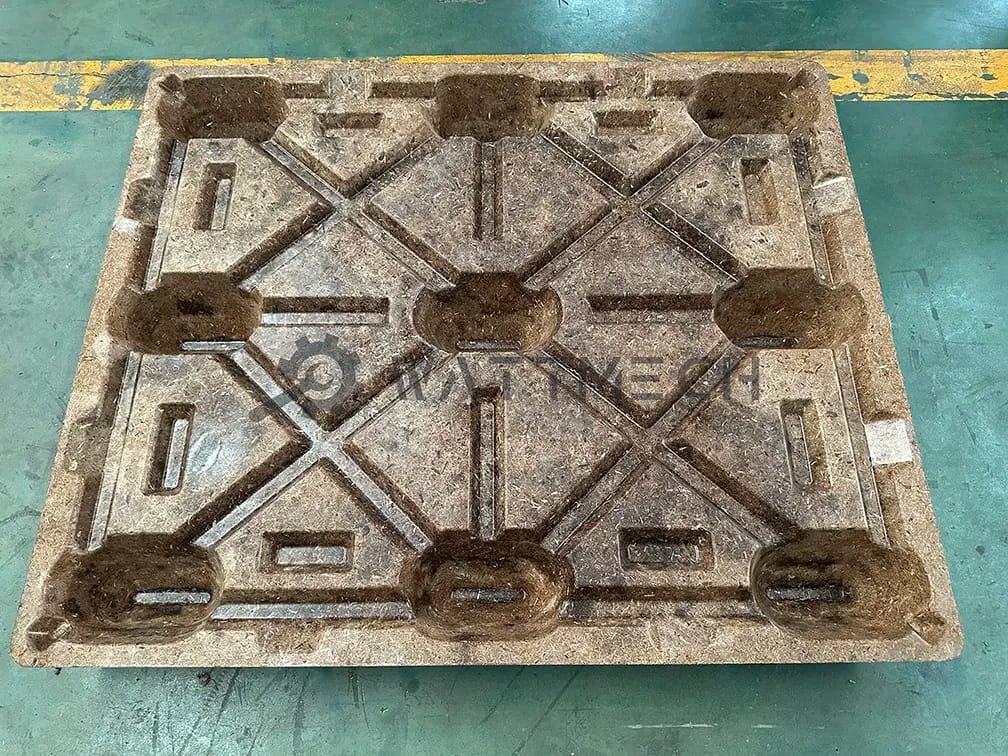
Engineering Excellence: Inside High-Tonnage Press Systems
Building a resilient, high-output pallet-molding facility demands precision hydraulic control and robust clamping mechanics. Industry pioneers—such as the engineering specialists at ZK Hydraulic—have integrated advanced servo-driven hydraulics, synchronous half-nut locking mechanisms, and automatic cylinder exhaust systems into their heavy-duty press series.
These engineering enhancements deliver critical plant-floor advantages:
- Rapid Cycle Consistency: Synchronized clamping and automated mold extraction minimize dead time, allowing production lines to operate continuous, high-volume shifts with error rates kept to a minimum. You can review the complete machinery lineup on our Hydraulic Press Product Page.
- Multi-Material Adaptability: Upgrading from standard frames to robust high-tonnage configurations enables plants to process not only traditional wood chips and agricultural fibers but also recycled thermoplastic composites, maximizing factory utilization across feedstock cycles.
- Verifiable Material Circularity: Re-engineering industrial wood residues and post-consumer scraps into durable logistics platforms directly supports corporate Scope 3 ESG reporting and zero-waste initiatives.
To evaluate finished product specifications, custom dimensions, and load-bearing ratings tailored to automated storage and retrieval systems (AS/RS), visit the Palletsbiz Custom Molded Pallet Catalog. Additional updates regarding international trade compliance and export exemptions can also be tracked via our Global Packaging Regulatory News Hub.
Conclusion
The evolution of molded wood packaging demonstrates that high-volume industrial productivity and environmental sustainability can go hand in hand. By investing in precision-engineered presswood pallet machinery, forward-thinking manufacturers can transform regional waste liabilities into predictable, high-margin logistics assets.